Issue Brief // Federal Overreach

Protect Georgia Citizens From Out-of-Control Federal Agencies.

This is not about protecting crime. It is about protecting Georgia families from federal overreach, warrantless intrusion, secretive enforcement, and agencies that act like constitutional limits are optional. If the government can ignore rights in one neighborhood today, it can ignore yours tomorrow.

ICE-marked vehicle after a crash scene
Photo credit: Carlin Stiehl/Los Angeles Times

Your Home

No Georgia citizen should have to wonder whether armed agents can show up at a home, hide their identity, and treat a judicial warrant like a technicality.

Due Process

Agencies without transparency and accountability do not stay limited. They escalate, they overreach, and ordinary people end up paying the price.

State Duty

Georgia has a duty to defend its residents from federal agencies that violate rights, operate in secret, or expect the state to help fund and normalize abusive systems.

Summary

Georgia citizens should not lose their basic rights because a federal agency decides speed matters more than the Constitution. Homes should require judicial warrants. Schools, hospitals, churches, and shelters should not become hunting grounds. Armed agents should identify themselves. State troops should not be pulled into immigration operations without explicit approval from elected Georgia leaders.

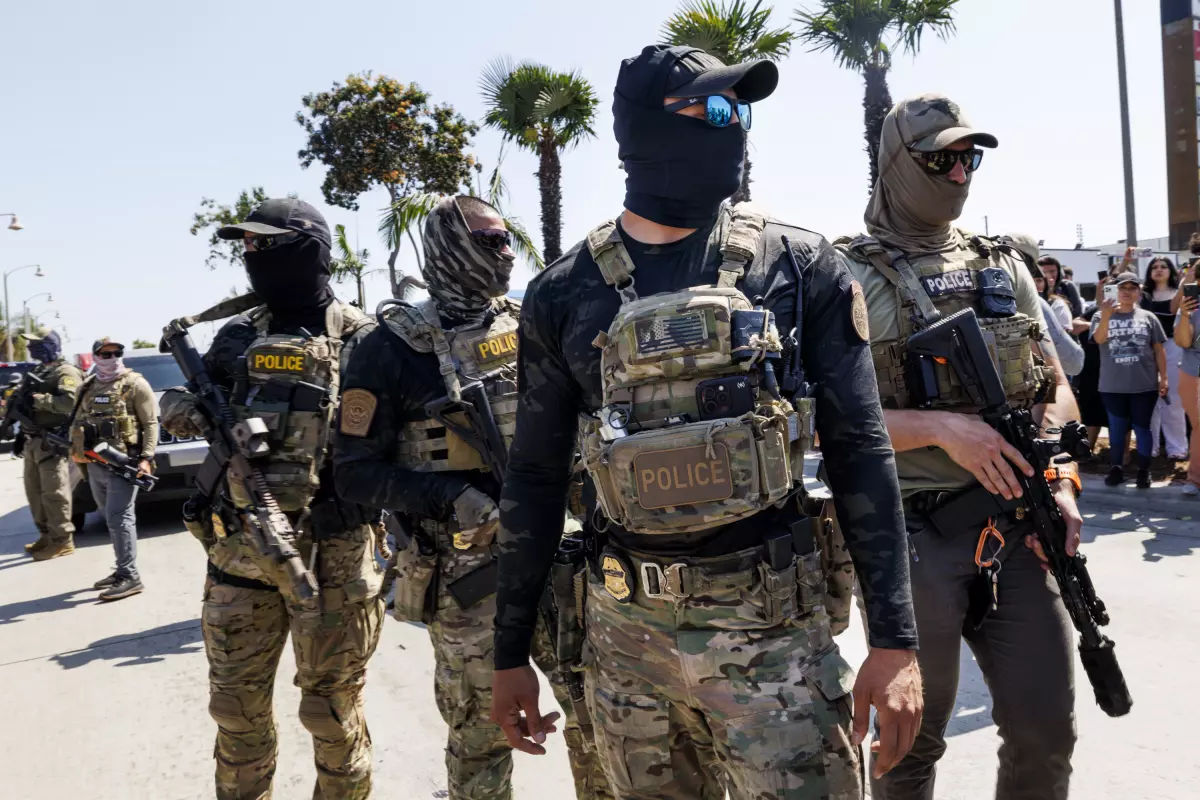
The core principle is simple: federal power does not cancel the rights of the people who live here. When agencies act in masks, hide badges, pressure local systems, or seek new detention infrastructure backed by Georgia money and roads, that is not public safety. That is mission creep backed by taxpayer dollars.

A state representative cannot rewrite federal immigration law, but Georgia can refuse to be a passive partner in constitutional abuse. Georgia can insist on warrants, transparency, location limits, and political accountability. Georgia can stop subsidizing detention expansion. Georgia can refuse to turn every public institution into an extension of federal enforcement.

Protecting rights is not anti-law-enforcement. It is pro-Constitution, pro-family, and pro-Georgia.
Bills To Watch

  • SB 389

    Requires ICE agents to display badges and bans face coverings while on duty except for safety or medical reasons so Georgians know who is exercising power against them.

  • SB 390

    Bars armed state forces, including the National Guard, from assisting federal immigration operations without explicit authorization from elected state leadership.

  • SB 391

    Prohibits federal immigration agents from entering schools, churches, hospitals, libraries, and domestic violence shelters without a judicial warrant.

  • SB 517

    Stops new immigration detention facilities in Georgia for two years so the state does not rush into expanding a detention footprint that is already tied to repeated rights concerns.

  • SB 549

    Cuts off state funding, tax incentives, and infrastructure support for ICE detention centers so Georgia taxpayers are not forced to subsidize federal detention expansion.

Example Issues In The News

ReutersHome entry without judicial warrants

Lawsuit challenges ICE ability to enter homes without warrants from US judges

A 2026 lawsuit argues ICE policy unlawfully lets agents enter homes using administrative warrants instead of warrants signed by a judge.

Read article
APSensitive locations

Religious groups challenge immigration enforcement in churches

Faith groups challenged immigration enforcement actions in houses of worship, highlighting the broader fight over whether sensitive locations should stay protected.

Read article
NPRSchools and churches

Trump immigration changes put schools and churches back in the enforcement debate

NPR outlined how policy changes reopened the question of whether schools and churches can become part of routine immigration enforcement activity.

Read article
ACLUStops, arrests, and profiling

Hussen v. Noem

The case challenges suspicionless stops, warrantless arrests, and racial profiling tied to ICE and CBP operations in Minnesota.

Read article